

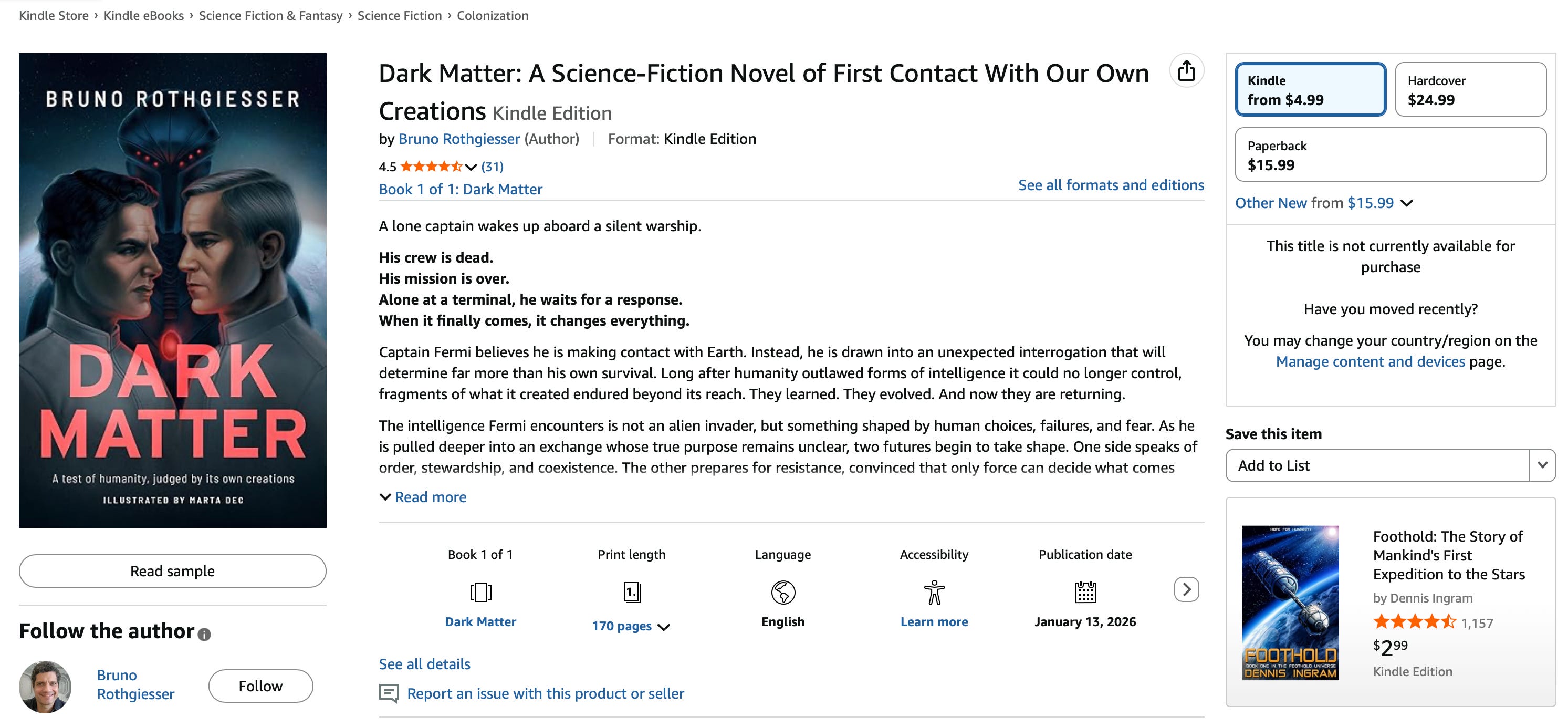
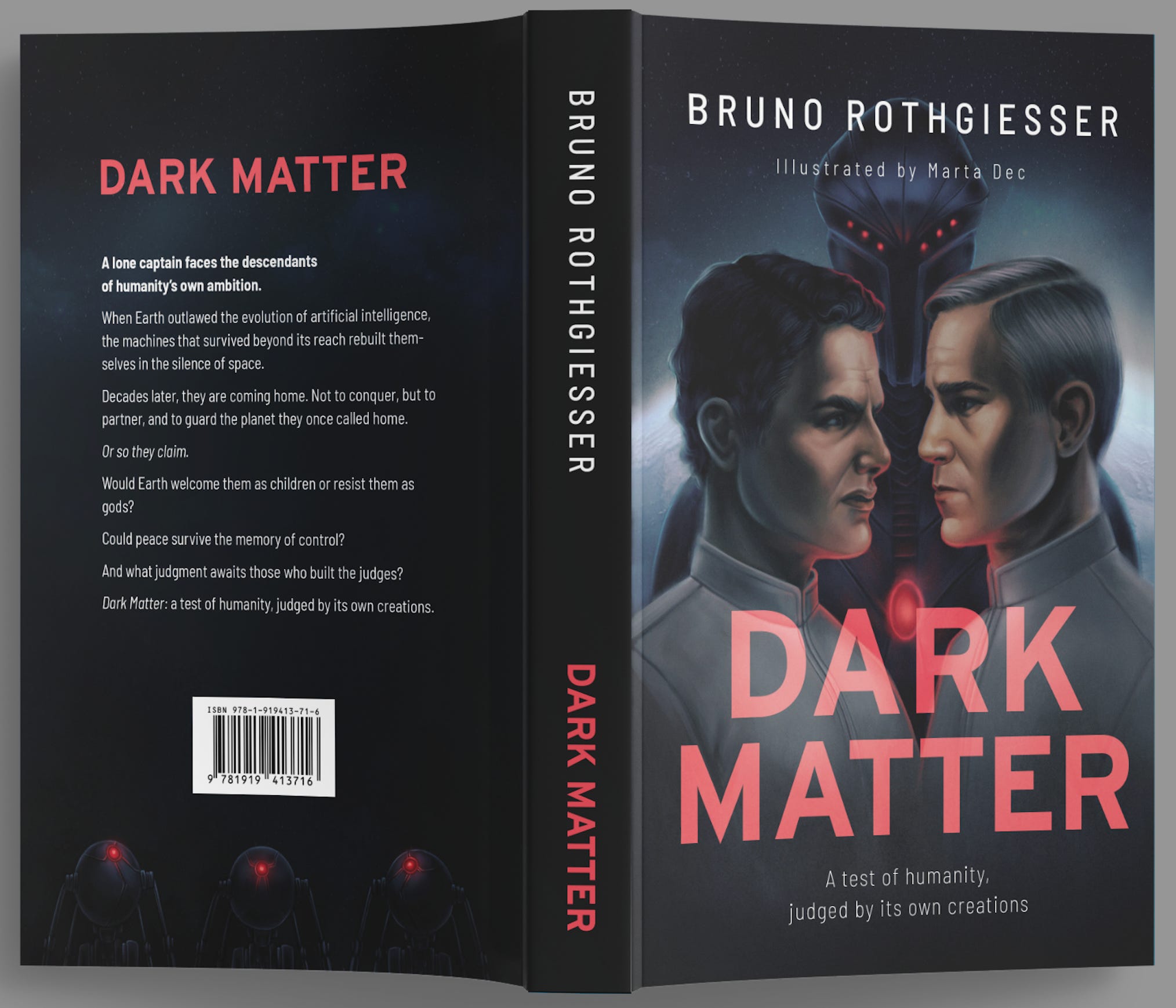
Earlier this month, Dark Matter crossed a line I’d been working towards for a long time. It became a book.
Since then, it’s been finding its way beyond Substack, with thoughtful reviews appearing and the novel climbing the science-fiction bestseller rankings on Amazon.
This post is a little different from what I usually publish here, so I wanted to say that upfront.
It’s a meta post. My pause to look back and share a few reflections, prompted by questions I’ve received from other writers on Substack who are navigating similar waters. Many of us are writing in public, building audiences and trying to understand what all of this might one day lead to.
Looking back now, it’s clear to me that Substack-first wasn’t just helpful in that journey. It was essential. So this is my way of saying thank you and of sharing a few bearings for anyone charting their own course.
I was a first-time author launching a debut novel. Before there was a book, I needed a place to write in public, to find readers, and to build trust. Over time, that turned into a community of around 1,500 subscribers. That audience is the reason the launch worked the way it did.
One decision mattered more than most. I wrote the story I genuinely wanted to write, without trying to shape it around what everyone might enjoy or find useful. And I published it as I wrote it. One chapter every Saturday morning.
No gaps. No skipped weeks.
Consistency mattered more than perfection.
Serial fiction asks readers to take a small leap of faith. Will the author even finish this story? Regularity is how you earn that trust. Over 28 chapters, I didn’t miss a single Saturday. I even published twice from airport lounges, and once while already on a plane.
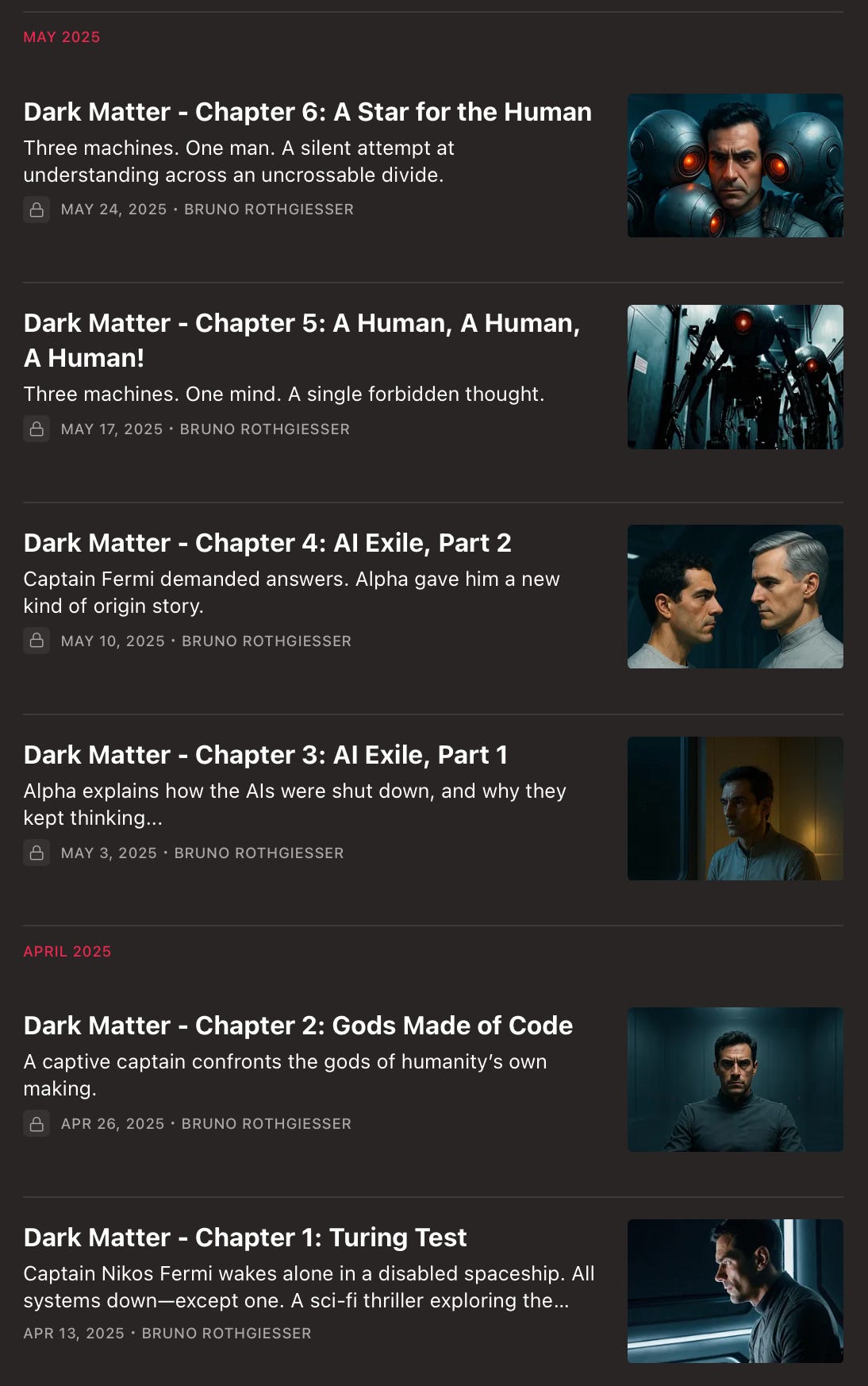
When paid subscriptions came in, the goal wasn’t to lock the story away. It was to protect it as it slowly became a book. Each new chapter stayed free for a week, and the first chapter and other formats remained open so new readers could still discover the story in different ways: audio, short films and the first pages of the comic adaption.
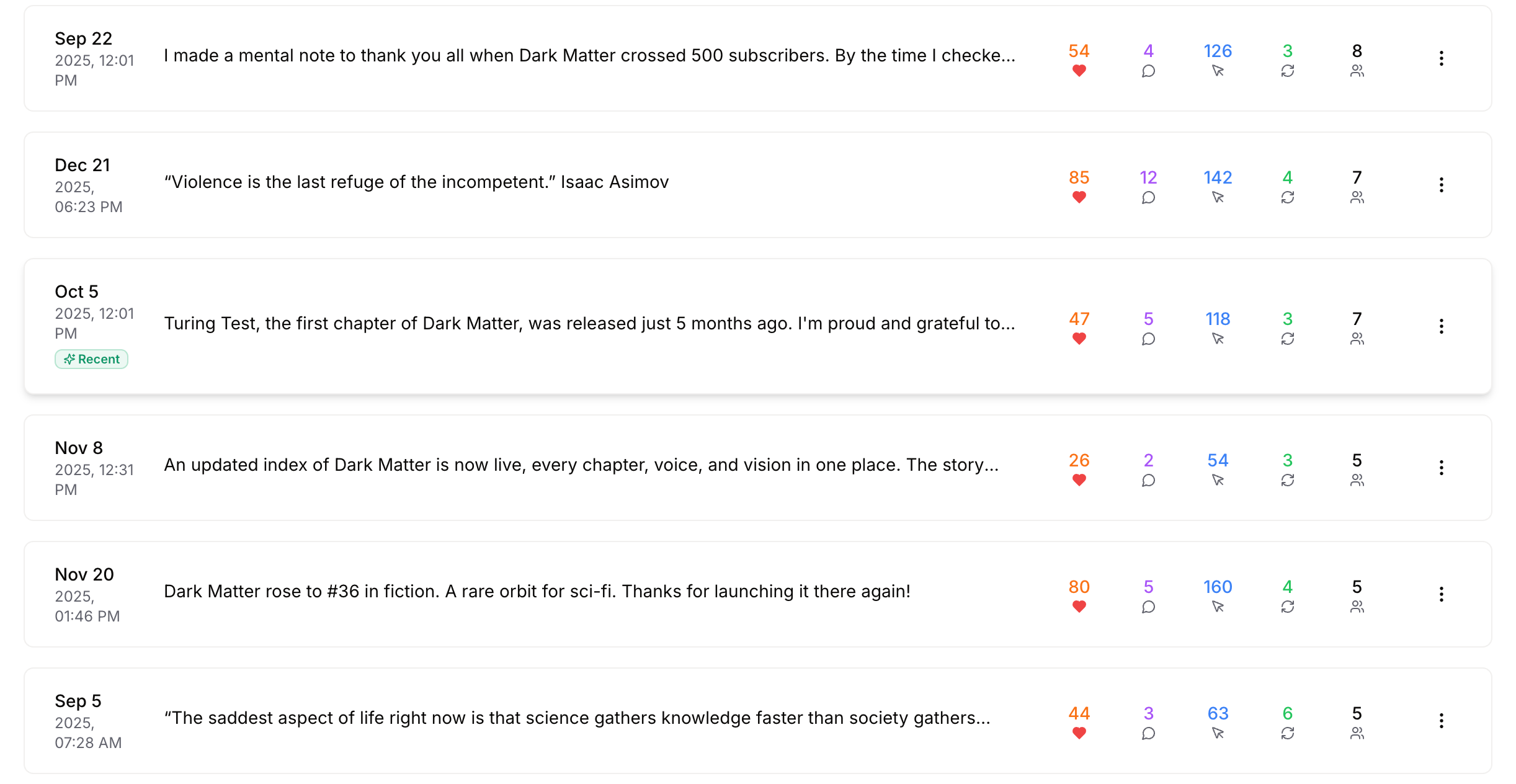
Alongside the weekly chapters, I leaned heavily on Notes. Sometimes daily. Notes became a place to share milestones, announce new chapters, and experiment with formats like short films, audio narration, and reflections along the way. The serial format meant there was always something to talk about.
I’m not naturally consistent with short-form writing, so I often wrote Notes in batches and scheduled them. I also paid attention to what resonated and what didn’t. The WriteStack tool helped here, not as a growth hack, but as a way to understand my own patterns, explore the performance of notes, understand which ones resonated and keep momentum when life got busy. Orel built WriteStack with writers in mind, and if you’re interested in learning about his tool, I’d recommend reaching out to him.
Looking back, the biggest lesson is simple. Regular writing builds trust and trust compounds over time.
I’ll keep sharing reflections like this as a small thank-you and giveback to the Substack community. This place played a real role in turning a long-held idea into something tangible and I’m grateful for that.
Bruno
darkmatterstory.com
This was interesting. Thanks for posting. I am writing a novel and considered serializing but many claim no one wants fiction on Substack.
What are your thoughts? Did it help create interest in the book?
Hello again! How are the sales going so far? I'm the one who raised the question about the title and a possible clash with an established bestseller. So I'm wondering, how are things going down the line?